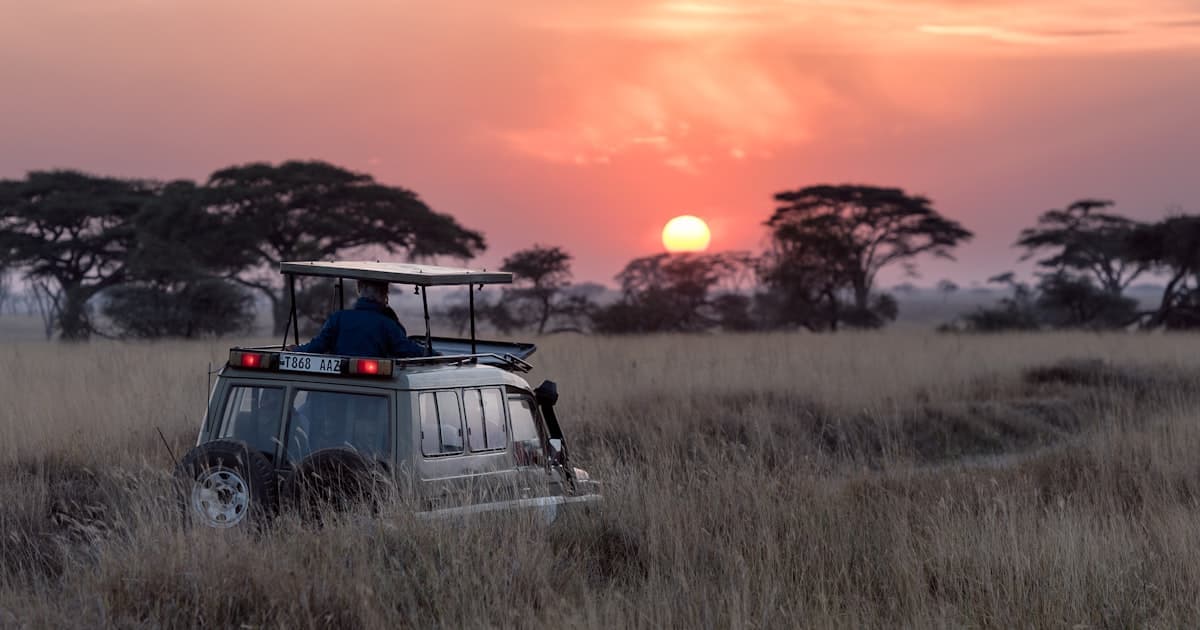
The first time I saw an elephant in the wild — not behind a fence, not on a screen, but actually standing fifty feet away in the golden hour light of an East African savanna — something clicked that I didn't expect. I wasn't just moved. I was creatively unlocked.
That moment, and dozens like it across multiple safari trips, became the foundation of my prints shop. Not in a planned, strategic way. In the way that the best creative work happens — organically, from genuine experience, from travel that changes how you see things.
This is the story of how safari inspired art prints became the heart of my design language, and what nature taught me about creating things that connect with people.
Why Safari, Specifically?
I've been fortunate enough to travel widely, and different places inspire different things. Cities inspire energy and ambition. Mountains inspire perspective and solitude. But safari? Safari inspires wonder. The kind of wonder that makes you want to capture what you're seeing and share it with someone who wasn't there.
There's something about African safari art — the colors, the scale, the rawness of it — that doesn't translate through a photograph alone. Photos capture the moment. But the feeling? The warmth of the light, the stillness right before a herd of wildebeest moves, the absurd elegance of a giraffe walking across an open plain? That feeling lives in interpretation, not documentation.
That's where design comes in. The best travel inspired design doesn't try to replicate what a camera captures. It tries to evoke what the camera misses — the emotion, the atmosphere, the sense of being somewhere extraordinary.
From Photos to Prints: The Translation Process
When I came home from my first safari, I had thousands of photos and a head full of images I couldn't stop thinking about. The question was: how do you turn that into something that fits on a sticker or a print?
The answer, I discovered through a lot of trial and error, is simplification. Safari inspired art prints work best when you distill the subject down to its essence. An elephant doesn't need every wrinkle rendered in detail. It needs the silhouette, the posture, the sense of mass and gentleness. A sunset doesn't need photorealistic gradients. It needs the right three colors in the right proportion.
This was a huge lesson for my overall design philosophy. Early on, as I wrote about in the Sundream growth playbook, I overcomplicated designs. The safari-inspired work taught me that restraint is more powerful than detail. A simple, bold wildlife print communicates more at sticker size than an intricate illustration ever could.
The design language that emerged — clean lines, warm sunset palettes, bold silhouettes against minimal backgrounds — owes everything to what I learned standing in front of actual wildlife, watching how light and landscape compose themselves naturally.
What Nature Teaches About Design
Here's something I didn't expect to learn from safari that applies far beyond wildlife prints: nature is the best designer.
Every color palette in our African safari art collection came from an actual moment — an actual sky, an actual landscape, an actual animal in actual light. I didn't open a color picker and choose what looked good. I matched what I saw. And it turns out that nature's color palettes are almost always better than anything I could construct synthetically.
The warm oranges and deep magentas of an East African sunset. The dusty gold of dry savanna grass. The slate gray of an elephant's skin against a blue-white sky. These combinations feel right in a way that's hard to articulate but immediately recognizable when you see them in a design.
This extends beyond color. The composition principles in nature — the way a lone acacia tree frames a horizon, the way a herd creates pattern and rhythm across a landscape — these are the same principles that make visual design work. Balance, focal point, negative space, repetition. Nature doesn't read design textbooks, but it follows the rules better than most designers.
At GAS Studio, we talk about building with purpose. For my prints, the purpose is spreading joy — and the travel inspired design approach is how I deliver on that. Each print carries a piece of a real experience. That's what makes it more than decoration. It's a feeling, condensed into a sticker.
Travel as Creative Fuel
I want to make a broader point here, because I think it applies to anyone building a creative business, not just people making safari art.
Travel as creative inspiration isn't about exotic destinations or expensive trips. It's about disruption — the productive kind. When you're in an unfamiliar place, your senses sharpen. You notice things you'd normally filter out. Colors, textures, sounds, patterns — they all register differently when you don't have the comfort of familiarity dulling your attention.
That heightened attention is creative gold. It's why so many writers and artists and musicians talk about travel as essential to their process. Not because Paris is inherently more inspiring than Milwaukee (though the croissants are better), but because novelty forces your brain into a mode that routine suppresses.
For me, safari was the most extreme version of this. Everything was unfamiliar. The landscape, the animals, the light, the sounds, the scale. I couldn't default to autopilot. And in that heightened state, creative ideas flowed in ways they rarely do at a desk.
I've tried to build that principle into how I run my prints business. Regular trips to new places — not always safari, not always far — to keep the creative pipeline full. Each trip generates design concepts, color studies, and compositional ideas that fuel months of product development.
What's Next for the Safari Collection
The wildlife prints line continues to grow. We're expanding beyond East Africa into Southern African landscapes, adding botanical prints inspired by the incredible flora you encounter on safari, and developing a series of abstract pieces that capture the feeling of safari without depicting specific animals.
We're also exploring larger format prints — moving beyond stickers into wall art, apparel, and home goods where the safari inspired art prints can be experienced at a scale that does them justice. A sunset silhouette that works beautifully at three inches hits differently at thirty.
Every new piece starts the same way: a real experience, a real place, a real moment of wonder. Then simplification. Then translation into something you can hold, stick, wear, or hang. That process — from travel to design to product — is the creative engine at the heart of my prints shop.
And honestly? It's one of the most rewarding things I've ever built. Not because it's the biggest venture in the GAS Studio portfolio. But because every product carries a piece of a story worth sharing. That's doing good, at scale — spreading small moments of joy, one sticker at a time.
Browse the prints shop to see safari-inspired work. Follow the journey in the Journal or get in touch if safari inspires you too.
This entry is part of our Venture Spotlights series. Subscribe to the GAS Studio Journal RSS feed to stay in the loop.